
The ‘Shape-Shifting’ Millennials
The Fawn Generation

Growing up with a strict dad, I learned to read the sound of his footsteps the way other kids learned to read books.
The moment I heard his voice or saw him coming home from a distance, something inside me shifted, like flipping a switch. By the time he walked through the door, I was sitting with a book open, performing the role of the good girl who always studied.
I had learned long before I had the language for it, that the version of me with a book open was the version that my father approved of.
That reflex followed me out of the house and into every room I entered for the next decade.
At school, I became the teacher’s pet. The As & Bs student. The kid who got appointed school captain at 16, because I had mastered the art of being exactly what authority figures wanted to see.
At work, every boss loved me, because I could walk into any environment, read the power dynamics in about thirty seconds, and quietly become whatever the room required.
I thought that was my personality. I was “adaptable.”
It took me years to understand what that reflex actually was and where it came from. And when I finally did, I started seeing it everywhere. Not just in myself. In my friends, my clients, my entire generation.
There’s a reason you feel exhausted by a life that looks fine on paper.
There’s a reason you can’t answer the question “what do you actually want” without freezing.
There’s a reason every relationship feels like work and every job feels like performance.
It’s the same reason. And it has a name.
The shift nobody sees
Psychotherapist Pete Walker identified something he called the fawn response in his work on complex trauma.
You’ve heard of fight, flight, and freeze.
Fawning is the fourth one, and it’s the one that gets the least attention because it is akin to competence.
Fawning is what happens when your nervous system decides that the safest way to survive a threatening situation is to make yourself useful, agreeable, and small.
You don’t run, fight, or freeze. You shape-shift.
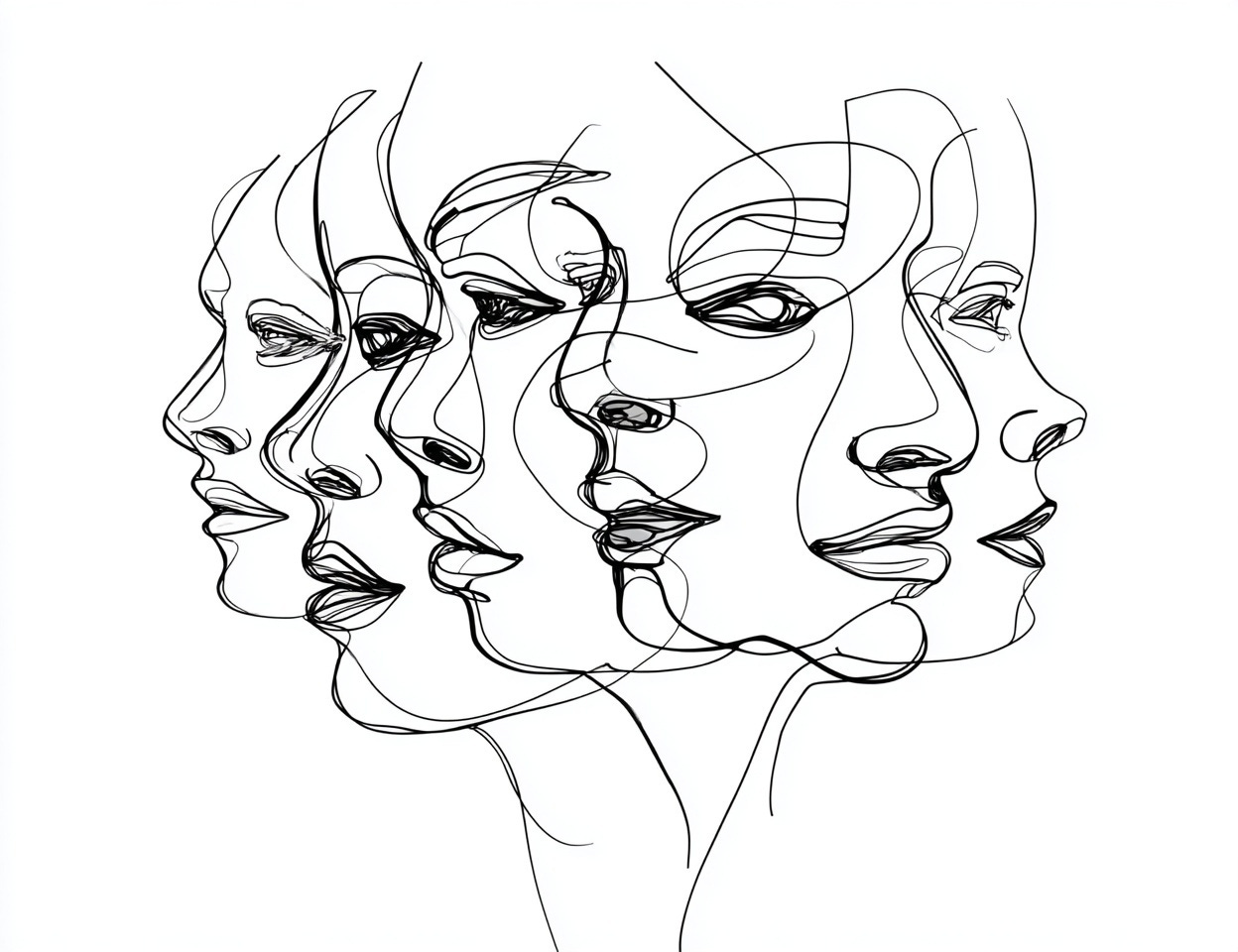
You figure out what the most powerful person in the room wants, and you become that. It’s so automatic that after a while you can’t tell where the performance ends and you begin.
It was first studied in people who grew up in unpredictable homes. People who learned that the fastest way to avoid pain was to become whatever the dangerous person needed them to be.
But as I’ve grown and seen a lot more I don’t think fawning is just an individual trauma response anymore. I belive it describes how an entire generation was trained to move through the world.
Millennials are the shape-shifting generation!
We walk into a meeting and become one person.
Walk into our parents’ house and become another.
Go on a first date and become a third.
Log onto social media and become a fourth.
And we do it so seamlessly, so automatically, that we’ve convinced ourselves this is normal.
But this is a survival reflex that outlived the danger it was built for, and there’s cost to living like this but first…
The snitch, the chameleon, and the peacekeeper
Someone breaks a minor rule, nothing dangerous, nothing unethical, and watch the millennials in the room. They won’t cover for the person.
Instead, something subtle happens. Glance toward the manager, some quiet comment after the meeting that creates distance from whoever rocked the boat. Maybe an email that casually loops in a supervisor, just enough to signal: I saw what happened, and I wasn’t part of it.
Coz Susan, why the hell would you CC my manager because I couldn’t make it to a meeting which you are perfectly capable of handling without me?
Nobody asked them to do this.
But the shape-shifter’s reflex runs the same calculation every time: who has power in this room, and how do I position myself on their side? The unsettling part is millennials don’t experience this as snitching but as being responsible.
In the presence of status, it looks like automatic deference. The chameleon.
Someone pulls up in a nice car and watch what happens to you. Your posture shifts. You laugh at things that aren’t funny. You start choosing your words like you’re drafting a press release. Five minutes ago you were talking to a coworker like a normal human being, and now some guy in a BMW has walked in and you’re suddenly performing “respectful”.
Did he say anything smart?
Did he demonstrate character?
Did he do a single thing to earn the shift in how you’re treating him?
Nope!
He has a car and a title and that was enough.
Because the shape-shifter brain doesn’t evaluate people. It scans for power. And the moment it detects someone who ranks higher on whatever invisible scoreboard you’ve been carrying since childhood, it starts adjusting your behavior without your permission. You didn’t choose to be deferential. You just were, and you probably didn’t even notice until right now.
In relationships, it looks like conflict avoidance. You know the drill. Something bothers you. You don’t say anything. It bothers you again. You still don’t say anything. It bothers you a third time and now it’s been weeks so bringing it up feels disproportionate, so you swallow it again and tell yourself you’re “picking your battles.”Calling it be ‘being mature.’
And on the rare occasion you do say something, you rehearse it in your head for three days, cushion it in so many qualifiers and pre-apologies that the actual point gets buried, and the moment the other person’s face changes you backpedal so fast you end up apologizing for having feelings in the first place.
That’s shape-shifting in real time.
You’re rewriting yourself mid-sentence to keep someone else comfortable, and their comfort takes priority over your honesty every single time.
When they get upset, you fold because the reflex is activated, and the reflex only knows one command: restore harmony at any cost, even if the cost is you.
This is why so many millennials are exhausted in their relationship & careers. Yes both have their own share of challenges but performing peace while swallowing everything that would actually create it is one of the most draining things a human being can do.
The bill comes due
You can’t shape-shift forever…sorry Susan
Britney Spears spent her entire adolescence and twenties being exactly what everyone needed her to be.
The pop princess.
The good girl.
The comeback kid.
The tabloid villain.
The performer who showed up and smiled no matter what was happening behind the curtain.
She later said it herself: “I was trying to please everyone around me because that’s who I am deep inside.”
She shape-shifted until the shape broke. And when it broke, it didn’t break quietly. It broke in front of the entire world, with a shaved head and a paparazzi mob, and everyone acted shocked as if they hadn’t watched the pressure build for a decade.
Jonah Hill spent years being the funny, self-deprecating, agreeable guy Hollywood wanted him to be, then quietly withdrew from public life and stopped doing press entirely because the performance had become unbearable.
These aren’t random celebrity meltdowns. These are what happens when the fawn response runs out of fuel.
And if you’re thinking “yeah but that’s celebrities, that’s a different kind of pressure,” nope. This is happening in your office, in your friend group, in your family, every day. You just don’t put it on a magazine cover when it happens to regular people.
You’ve seen it.
The friend who was easygoing for years and then one day exploded over something minor, and everyone was blindsided because they never saw it building.
The coworker who quit overnight with no warning, because they never learned to address problems gradually so the only exit they knew was the emergency one.
The person who freezes in front of a decision that should be simple, because they’ve spent so long letting other people’s expectations choose for them that when they finally try to choose for themselves, there’s nothing there. Just static where a preference should be.
Fight, flight, or freeze. The three responses that fawning was supposed to protect you from.
And the bitter irony is that years of shape-shifting don’t prevent them. They just delay them, and add compound interest to the damage.
How an entire generation got programmed
This didn’t happen by accident.
Millennials were raised at a very specific intersection: the tail end of “respect your elders” parenting and the beginning of “you’re special and you can be anything” messaging. Those two programs sound contradictory but they combine into something precise. You absorbed the idea that your potential was limitless, and you also absorbed the idea that the path to realizing it ran through approval, through authority, through earning your place in systems you didn’t build and weren’t invited to question.
Your parents told you to follow your dreams.
Your schools told you to follow directions.
And when those two instructions collided, most of us defaulted to the one that felt safer: follow directions, and dream quietly on the side.
Then “on the side” turned into a decade. Then two.
And the system didn’t just train you to shape-shift, they reward you for it.
School rewarded the kid who didn’t challenge the teacher.
Your first job rewarded the employee who absorbed extra work without complaint.
Your family rewarded the child who kept the peace.
Social media rewards whoever performs agreeableness the most convincingly.
You weren’t shaped by one bad experience just the thousand small rewards for being someone other than yourself. And that’s harder to see, and much harder to undo, than any single traumatic event. Because you can point at a trauma and say “that hurt me.” You can’t easily point at a promotion, a compliment, a pat on the back, and say “that trained me to disappear.”
The shape you forgot
You’ve spent so many years becoming what each room needed that when someone asks you what you actually want, not what’s practical, not what’s realistic, not what would make your parents proud or your boss comfortable, but what you want, the honest answer might be: I’m not sure anymore.
The logical outcome of a lifetime spent prioritizing everyone else’s comfort over your own identity.
The snitching, the deference, the conflict avoidance, the reflexive adaptation to things you should have walked away from are programs installed when you were a kid with no power trying to survive in rooms controlled by adults who held all of it.
But you’re not that kid anymore.
And the program is still running.
The first step isn’t a dramatic overhaul. If you’ve read anything I’ve written before, you know I don’t believe in those.
The first step is catching yourself mid-shift. That moment when you feel the reflex kick in, when you feel yourself starting to rearrange who you are to fit what the room wants, and instead of completing the shift, you pause and ask one question:
Is this what I actually want, or is this the reflex?
That question is small. But it might be the first time in a long time the real you gets a vote.
It’s hard at first, almost mechanical but with time it gets easier and you rewrite the programming.
Plenty of times you will shapr shift but don’t give up…1 win a week is greater than 0.
The next time you walk into a room and feel yourself start to shift, ask yourself: who were you before you learned to do that?
If you don’t know, that’s the answer.
And if you keep shape-shifting without ever asking that question, you’re a ticking time bomb.
As a recovering shape-shifter, my first instinct was to do what I’d always done: overhaul everything overnight. Fix it all at once. Shape-shift one last time into the “healed version” and move on. But you can’t undo years of programming in a week, another performance.
What actually worked was building systems.
Small, boring, daily systems that forced me to check in with what I actually wanted instead of defaulting to what the room wanted.
That’s why I built Accountability HQ. To help you build the life you actually want, not the one you defaulted into because the reflex chose for you.